- Functions more like a scholarship where no money changes hands — credit is applied toward the student’s balance
- Government does not need to approve the employment
- 20 hours per week while school is in session; 40 hours per week when on break
- Job supervisor must contact the DSO with a job description and receive the DSO’s approval before the student starts work
- The DSO will walk the student and supervisor through the process, including how to obtain a Social Security number for tax purposes
International F-1 Students
Information and resources for international students attending ACU with an F-1 visa.
Helpful Links for F-1 Students
U.S. Citizenship and Immigration Services
An official website of the U.S. Department of Homeland Security offering information and news on the U.S. lawful immigration system.
Visit SiteStudy in the States
Free government resources from the U.S. Department of Homeland Security explaining the rules and regulations governing the nonimmigrant student process.
Visit SiteI-901 SEVIS Fee
The SEVP I-901 SEVIS Fee Processing website. Form I-901 is used to remit payment for prospective nonimmigrants seeking F-1, F-3, M-1, M-3, and J-1 visa status.
Visit SiteStudent and Exchange Visitor Program
The official SEVP and SEVIS website with information and resources for nonimmigrant students in the U.S. under an F (academic) visa.
Visit SiteSEVP Student Employment
Answers to frequently asked questions about on- and off-campus employment for F-1 students.
Visit SiteSEVP Student Travel
Information for F-1 students who travel outside of the United States.
Visit SiteF-1 Employment Information
The employment guidelines for F-1 students are set by the Department of Homeland Security (DHS) and U.S. Immigration & Customs Enforcement (ICE). There are limited work opportunities available in the United States for F-1 students. Students must prove they have the financial ability to pay for tuition and living expenses before getting an F-1 visa.
1
On-Campus Employment (Credit Applied)
2
On-Campus Employment (Paycheck)
Paid employment with Sodexo or ACU directly.
- Government does not need to approve the employment
- 20 hours per week while school is in session; 40 hours per week when on break
- Job supervisor must contact the DSO with a job description and receive the DSO’s approval before the student starts work
- The DSO will walk the student and supervisor through the process, including how to obtain a Social Security number for tax purposes
3
Off-Campus Employment (Economic Hardship)
Available only for severe temporary economic hardship situations.
- Student is eligible after completing a full year of academic studies
- The DSO will guide the student through the government application process and supporting documentation
- There is a fee for this application that is subject to change at the decision of the U.S. government
- Both the application and application fee go to U.S. Customs & Immigration Services and require their approval, not the DSO
- The student cannot start working until they have received authorization documents from the government
- This form of employment is valid for one year and must be renewed annually as needed
Consequences of Illegal Employment
Babysitting, house cleaning, dog walking, car washing, tutoring, and similar activities for cash payments are considered illegal employment and are strictly forbidden.
- The DSO must report illegal employment to ICE and terminate the student’s I-20
- The student must leave the United States immediately without a grace period
- The student may not be allowed to return to the United States
- ACU could lose its SEVP certification for failing to report illegal employment
- All other F-1 students at ACU would have to return to their home country
- ACU might never be approved for SEVP certification again
When in doubt, please reach out to your Designated School Official.
Optional Practical Training (OPT)
Leave blank for now — the source content mentions OPT in the navigation but no detailed content was provided. The section will be hidden automatically when empty. Update when OPT content is available.
Contacting Your DSO
A Designated School Official (DSO) is an ACU staff member designated to provide recommendations to SEVP students regarding maintenance of nonimmigrant status and to support timely and complete record keeping and reporting to the U.S. Department of Homeland Security.
All F-1 students must check in with their DSO at least one time each semester within 30 days of the start of the semester. This check-in must be in person. At the start of each term, students will receive an email from the DSO with instructions on scheduling the check-in appointment.
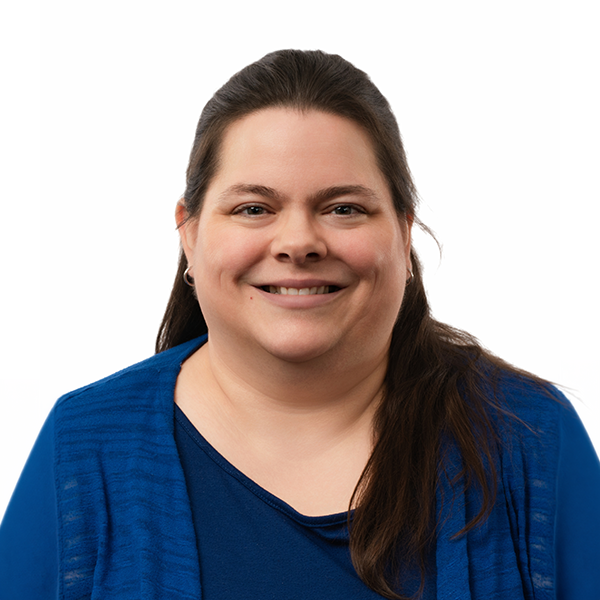
Jennifer Morris
Assistant Registrar
Designated School Official – DHS/SEVP/ICE

Tracy Martin, M.S.
Registrar
Principal Designated School Official – SEVP/DHS/ICE
This ACU website is intended to assist students in finding general information relative to studying in the U.S. under the SEVP program. ACU staff members cannot provide legal advice. ACU is not responsible for content found through external links. It is the student's responsibility to maintain his or her legal status in the U.S. and to comply with university policies and procedures.